

『Flow Meter Purpose Breakdown: Why Industrial Processes Rely on Precision Fluid Monitoring』Related information(flow rotameter|digital flow meter|balo meter|hydraulic flow meter|volumetric meter|positive displacement meter|pitot tube flow meter|displacement meter|cfm meter|variable area flow meter|inline flow meter|differential pressure flow meter|calibrated flow meter|velocity meter|paddle wheel flow meter|oval gear flow meter|anemometer hvac|multiphase flow meter|doppler flow meter|thorpe tube flowmeter|heat flow meter)
Flow Meter Purpose Breakdown: Why Industrial Processes Rely on Precision Fluid Monitoring
Quick Answer: Industrial processes rely on precision fluid monitoring because flow data controls batch quality, cost, and safety. A flow meter is not just a totalizer. It is the live feedback loop for dosing, transfer, and leak detection. Silver Automation Instruments supplies flow meters for water, chemical, fuel, and gas service across Southeast Asia, Oceania, Latin America, Africa, and the Middle East.
This flow meter purpose breakdown shows why engineers treat flow data as part of process control, not just accounting. A Coriolis mass flow meter on a chemical dosing line does a different job than an electromagnetic flow meter on a desalination intake. The common requirement is repeatable real time data.
We have seen this on customer sites many times. A plant buys a flow meter based on price alone. Six months later the reading drifts, the batch is off, and the maintenance team wastes time. Precision fluid monitoring avoids that cycle.
Flow Meter Purpose in Batch Dosing and Chemical Injection
Chemical plants often dose additives by weight or volume. The flow meter sends a 4-20 mA HART signal to a PLC or batch controller. If the signal is slow or noisy, the valve opens too long. The batch fails. Last year a customer in Vietnam asked us for a Coriolis mass flow meter to dose solvent into a reactor. The line size was DN15, the flow range was 0 to 200 kg/h, and the area required ATEX Zone 1 approval. We supplied a Silver Instruments Coriolis meter with 4-20 mA HART output and a local display.
Here is the thing. Direct mass measurement removes density and temperature errors. The PLC sees kg/h, not a calculated volume. That matters when the solvent has variable density. The same logic applies to food and beverage additives, pharmaceutical water, and coating lines.
Wastewater and Desalination Flow Monitoring
Water and wastewater plants buy electromagnetic flow meters because the fluid can carry sludge, salt, or solids. An electromagnetic flow meter has no moving parts. It measures conductive liquid from 5 µS/cm and up. A desalination plant in Saudi Arabia used a DN200 electromagnetic flow meter on a seawater feed line. The flow range was 300 to 600 m3/h. The meter needed rubber lining and titanium electrodes. Standard stainless steel electrodes fail quickly in seawater. The flow meter purpose was feed control, not just total volume.
Ultrasonic flow meters also work in water networks. A clamp-on meter can verify an existing pump without cutting pipe. This is useful for water utilities in the Philippines or Mexico that need a quick audit.
Fuel and Oil Transfer Metering
Oval gear flow meters handle diesel, heavy oil, and lubricants. These fluids have higher viscosity, sometimes 100 cP or more. A turbine meter may slip. An oval gear meter gives positive displacement accuracy. A marine service company in Nigeria ordered oval gear meters for diesel transfer from storage to day tanks. The pipe size was DN25 and the flow range was 30 to 150 liters per minute. The meter had a pulse output for a paperless recorder.
For fuel custody transfer, the flow meter purpose includes traceability. The pulse count becomes the billing record. If the pulse output misses counts, the operator sees a loss. This is why positive displacement meters remain common for oil and fuel.
Steam, Gas, and Compressed Air Monitoring
Steam flow measurement needs temperature and pressure correction. A vortex flow meter measures volumetric flow. A pressure transmitter and a PT100 temperature sensor feed a flow computer or PLC. The flow computer calculates mass flow in kg/h. A food processing plant in Thailand need
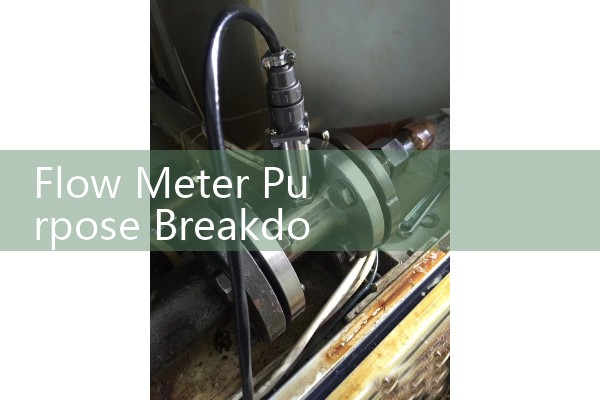
For compressed air, a thermal mass flow meter measures mass flow directly. It works well for leak detection. Many plants find that 20 to 30 percent of compressed air is lost through leaks. A flow meter on each branch makes the loss visible.
Process Accuracy and Maintenance
Most engineers skip this part. Flow meters need verification. A Coriolis meter may hold calibration for years. An electromagnetic meter may need electrode cleaning if the process coats the liner. An oval gear meter may need strainer cleaning. The flow meter purpose includes maintenance planning. If a meter fails in a remote site, the cost is not just the spare part. The cost is downtime.
Pressure transmitters and paperless recorders help with diagnostics. A pressure drop across a filter can explain a flow reading issue. A paperless recorder stores the trend. The engineer can compare flow, pressure, and temperature on one timeline.
How to Select a Flow Meter by Purpose
Start with fluid type, conductivity, viscosity, flow range, pressure, temperature, and pipe size. Do not start with the meter type. For conductive water, an electromagnetic meter is often the right choice. For diesel and lube oil, an oval gear meter works. For chemical mass balance, a Coriolis mass flow meter is the best fit. For steam and gas, a vortex or thermal mass flow meter works depending on the gas and accuracy target.
Silver Automation Instruments is a flow meter manufacturer and supplier for process instruments. We work with SME plants and distributors in Southeast Asia, Oceania, Latin America, Africa, and the Middle East. Send us your pressure in bar, temperature in °C, pipe size in DN, and flow range. We will quote a suitable model with output and protection options.
Contact Silver Automation Instruments at Tel: +86-25-68650347, WhatsApp: +86-25-52155837, or WeChat: +86 15365082610. You can also visit flow-meter.com.au for technical details.
FAQ: Flow Meter Purpose and Precision Fluid Monitoring
Which flow meter is best for chemical batch dosing?
A Coriolis mass flow meter is usually the best choice. It measures kg/h directly and handles variable density. Use a DN15 meter with 4-20 mA HART output for small dosing lines. Specify ATEX Zone 1 if the area is hazardous.
Can one flow meter handle seawater and wastewater?
An electromagnetic flow meter can handle both if the fluid is conductive. Seawater needs titanium electrodes and rubber lining. Wastewater with oils or solids needs proper liner and grounding.
What is a good flow meter for diesel transfer?
An oval gear flow meter gives repeated positive displacement accuracy for diesel and light oils. It works well for flow ranges from 30 to 150 liters per minute and provides pulse output for recorders.
How do I know if a vortex meter will work for steam?
Send the steam pressure, temperature, and pipe size. A vortex meter with PT100 and pressure transmitter can calculate mass flow. It works well for saturated steam from 8 bar to 16 bar in most plants.
What information is needed for a flow meter quote?
Provide fluid name, conductivity, viscosity, flow range, pressure, temperature, pipe size, output signal, and hazardous area class. This data lets us select the correct meter and liner material without delay.
Silver Automation Instruments serves industrial buyers and distributors. We keep the selection process simple. Tell us your process fluid and operating range. We will recommend a flow meter with the right body, liner, electrodes, and output.
 Hot Product
 Related AD